What Is a Secret Side Job? How to Work a Side Job Without Your Company Finding Out — Risks, Methods & Recommended Jobs Explained

Related Service
Go to お試し転職Table of Contents
- What Is a Secret Side Job? Definition and Background
- 5 Reasons Secret Side Jobs Get Discovered by Your Company
- 5 Strategies to Keep Your Side Job Secret
- 10 Recommended Secret Side Jobs
- Tax Filing and Tax Considerations for Secret Side Jobs
- Risks and Legal Considerations of Secret Side Jobs
- 3 Things to Verify Before Starting a Secret Side Job
- Conclusion: Risk Management Is Everything for Secret Side Jobs
"I want to earn more with a side job, but what if my company finds out..." While the trend toward allowing side jobs is accelerating, many companies still prohibit them, and there are quite a few people engaged in "secret side jobs" — working a side job without their employer's knowledge.
This article comprehensively covers everything you need to know about starting a secret side job: the current landscape, reasons companies discover side jobs and how to prevent it, recommended low-risk side jobs, and important notes on tax filing and resident tax.
What Is a Secret Side Job? Definition and Background
A secret side job refers to earning income outside your main employment without informing your employer (or despite your company's prohibition on side jobs). Media reports have highlighted the growing number of people quietly working side jobs without telling their companies or colleagues.
There are three major factors behind the increase in secret side jobs:
Rising Prices and Stagnant Real Wages
Many salaried workers feel that wage growth hasn't kept pace with recent price increases, leading to growing anxiety about their financial future from main employment alone. Surveys show that "stagnant main job wages" consistently ranks among the top motivations for starting a side job.
The Side Job Deregulation Movement vs. Companies That "Still Prohibit" It
In 2018, Japan's Ministry of Health, Labour and Welfare established guidelines for promoting side jobs and removed the side job prohibition clause from its model employment regulations. Despite a 2022 revision encouraging companies to disclose their stance on side jobs, a significant number of employers continue to maintain prohibition policies.
Remote Work and Free Time
With remote work becoming established after the pandemic, employees at remote-friendly companies gained free time previously spent commuting. The environment for pursuing side jobs during spare hours while working from home has been steadily improving, particularly for online work that can be completed entirely at home.
5 Reasons Secret Side Jobs Get Discovered by Your Company
The biggest fear when maintaining a secret side job is getting caught. Understanding the main ways companies discover side jobs helps minimize your risk:
Reason 1: Changes in Resident Tax Amount
The most common way side jobs are discovered is through resident tax. Resident tax is calculated based on the previous year's income and is typically deducted from your salary through "special collection." When side job income increases your resident tax, payroll staff may notice that the amount doesn't match your main salary alone.
Reason 2: Expanded Social Insurance Coverage
If your side job is an employment-type arrangement like a part-time job, meeting certain criteria may require you to enroll in social insurance at the side job as well. Since social insurance premiums are calculated by combining main and side job wages, the notification sent to your main employer can reveal your side job.
Reason 3: Telling Colleagues or Acquaintances
Surprisingly common is revealing your side job yourself. As your side job succeeds, excitement can lead you to casually mention it to a close colleague. However, this information can spread as office gossip and eventually reach management or HR.
Reason 4: Identity Exposure Through Social Media
Posting side job results on social media or including personally identifiable information on side job accounts risks discovery by company contacts. Even on anonymous accounts, post content, photo backgrounds, and lifestyle area details can lead to identification.
Reason 5: Being Physically Spotted
In-person side jobs like restaurant work or event staffing carry the risk of being seen by colleagues or supervisors. Working near your main workplace or in areas where employees commonly frequent is particularly risky. For a secret side job, choosing work that can be done entirely from home is the safest approach.
5 Strategies to Keep Your Side Job Secret
Now that you understand how side jobs get discovered, here are specific countermeasures:
Strategy 1: Switch Resident Tax to "Direct Payment"
The most important measure is switching the resident tax on your side job income to "direct payment" (self-payment). By selecting "Pay by yourself" in the "Resident Tax" section of your tax return, your side job's resident tax will be sent directly to your home via a payment notice, bypassing your company entirely.
Strategy 2: Choose "Contract/Freelance" Work Over Employment
Working a side job under an employment contract (like a part-time position) complicates social insurance and resident tax processing, increasing the risk of discovery. If you take on work as a contractor or freelancer, income is treated as "business income" or "miscellaneous income," giving you more control over tax handling.
Strategy 3: Never Discuss Your Side Job at Work
This seems obvious but is the most frequently broken rule. The more success you have with your side job, the more tempting it becomes to tell someone — but never mention it to anyone at work. Also be careful about visible changes in your lifestyle that come from side job income (like suddenly wearing expensive items or going on frequent trips).
Strategy 4: Maintain Strict Social Media Anonymity
On social media accounts related to your side job, avoid using your real name, face photos, information that could identify your employer, and photos of your neighborhood. Avoid linking to your main social media accounts as well. When doing affiliate marketing or blogging, be thorough about separating your personal identity.
Strategy 5: Choose Remote-Only Side Jobs
Side jobs that require working outside carry the risk of being spotted. Online side jobs that can be completed entirely from home dramatically reduce the chances of physical discovery. There are numerous jobs you can start with just a computer and internet connection, with zero commute time making them ideal for the time constraints of having a main job.
10 Recommended Secret Side Jobs
Here are carefully selected side jobs that are difficult for your company to discover and can be done from home. All are well-suited for contract/freelance work and easy to handle with direct resident tax payment:
1. Web Writer
Writing articles for corporate websites and blogs. No special qualifications are needed, making it one of the most accessible side jobs for anyone who enjoys writing. You can find projects on crowdsourcing platforms and write under a pen name, ensuring anonymity.
2. Video Editing
Demand for YouTube and TikTok video editing continues to grow. Once you learn editing software, you can earn several thousand to tens of thousands of yen per video. All deliveries are completed online, requiring no face exposure — making it ideal for secret side work.
3. Affiliate Blog
Running your own blog to earn advertising revenue and affiliate commissions. While monetization takes 6 months to a year, once established, it becomes a "stock-type" side job that generates semi-automatic income. Since anonymous operation is the standard, the risk of your company finding out is very low.
4. Programming & Web Development
Website creation and app development command high rates, and can be learned through self-study or online courses even if your main job isn't in IT. Projects can be found through crowdsourcing and freelance matching services, with fully remote work possible.
5. Social Media Management
Managing Instagram, X (formerly Twitter), and other accounts for businesses and sole proprietors. Main duties include content planning and creation, hashtag selection, and comment management. Since you don't need to appear publicly as the creator, the risk of identity exposure is low.
6. Online Reselling
A retail business of buying products cheaply and selling them on Amazon or Mercari. Everything from sourcing to listing to shipping can be done from home, and using FBA (Fulfillment by Amazon) eliminates packing and shipping hassle. Seller names can be set freely, maintaining anonymity.
7. Online Teaching & Consulting
Leveraging your professional knowledge and skills from your main job to provide online lessons or consulting. Using platforms like StreetAcademy and MENTA, you can operate under a nickname. The high hourly rate makes it an efficient side job.
8. Handmade Sales
Selling handmade accessories and goods on platforms like minne and Creema. You can start as an extension of your hobby, and since shops can be operated under a handle name, anonymity is easily maintained.
9. Investing (Stocks, Mutual Funds, Real Estate)
Strictly classified as "asset management" rather than a "side job," so it rarely causes issues even at companies that prohibit side jobs. Options like NISA savings plans, iDeCo, and high-dividend stock investing carry low risk even if your company becomes aware of them.
10. Point Activities & Survey Monitoring
Earning rewards through point sites and survey platforms. While it's difficult to earn significantly, you can do it on your smartphone during spare time, and the small income amounts typically stay within the threshold that doesn't require tax filing — making it a good entry point for side work.
Tax Filing and Tax Considerations for Secret Side Jobs
Tax knowledge is essential for safely continuing a secret side job. Here are the key points to remember:
The ¥200,000 Side Job Income Rule
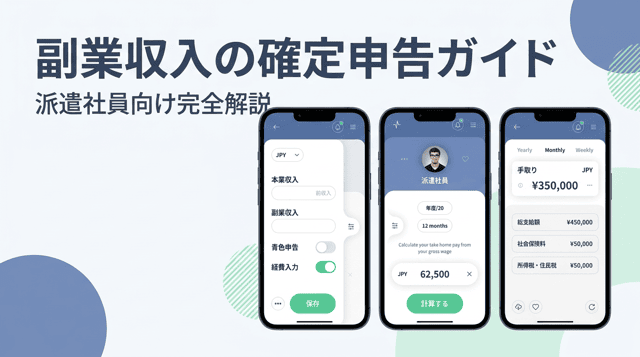
For salaried workers, if income from sources other than your main job (revenue minus expenses) is ¥200,000 or less per year, income tax filing is not required. However, this only applies to "income tax" — you must still file a resident tax declaration even if your income is ¥200,000 or less.
Selecting "Direct Payment" During Tax Filing
On the second page of your tax return, under "Resident Tax Matters," check the box for "Pay by yourself (direct payment)" for the collection method of resident tax on income other than salary and public pension. This ensures your side job's resident tax is sent directly to you, not through your employer.
What Happens If You Don't File?
If you fail to file a required tax return, not only will you face penalties for non-filing and late payment, but a tax audit could lead to your company discovering your side job. Precisely because you want to keep it secret, filing your tax return properly is the best self-defense.
Risks and Legal Considerations of Secret Side Jobs
Secret side jobs come with risks you should understand, not just benefits:
Risk of Employment Regulation Violations
If your company's employment regulations explicitly prohibit side jobs, discovery could result in disciplinary action. There have been court cases involving dismissals for violating side job prohibition rules. However, except for public servants, there is no law that generally prohibits employees from having side jobs.
Overwork and Impact on Main Job Performance
A 2025 survey found that 26.9% of respondents reported that overwork from side jobs had "interfered with their work" or "damaged their health" — a record high. With secret side jobs, you can't tell your company about health issues caused by overwork, making self-management of your physical condition critically important.
Information Leakage and Non-Compete Obligations
Using confidential information obtained through your main job in your side job could result in severe penalties for information leakage. Additionally, side jobs in the same industry as your main job may violate "non-compete obligations" — something that may not be permitted even at companies that otherwise allow side jobs.
3 Things to Verify Before Starting a Secret Side Job
1. Check Your Employment Regulations
First, review your company's employment regulations. Whether it's a "total ban" or a "notification/approval system" changes the approach you should take. Under a notification system, formally applying may allow you to start a side job without risk. It may also be worth consulting with HR about the possibility of permission.
2. Consider Balance with Your Main Job
If spending too much time on your side job causes your main job performance to decline, it could negatively impact your promotions and evaluations. Set personal rules like "maximum X hours per week on side work" or "weeknights only until X o'clock" to ensure your main job isn't affected.
3. Prepare for the Possibility of Being Discovered
No matter how thorough your precautions, there's no guarantee your side job will "never be discovered." Think through in advance how you would respond if caught. Having evidence ready that it "hasn't affected your main job performance" and "doesn't harm the company's interests" can help in such situations.
Conclusion: Risk Management Is Everything for Secret Side Jobs
With side job acceptance rates reaching a record high of 64%, side jobs are clearly gaining mainstream acceptance. However, as long as a certain number of companies continue to prohibit side jobs, the demand for "secret side jobs" — working without your employer's knowledge — will persist.
To safely continue a secret side job, be thorough about switching resident tax to direct payment, choosing contract-based work, maintaining social media anonymity, and selecting remote-only jobs. Above all, properly filing your tax return is your best line of defense.
Side jobs aren't just about increasing income — they're valuable opportunities to gain new skills and connections. Understand the risks properly, manage them appropriately, and expand the possibilities of your career.
Share
Related Articles

20 Best One-Day Gigs for 2026: Recommended Jobs by Category with Same-Day Pay, Safe Job Hunting Tips & Tax Guide
"I only want to work on my days off" or "I need money right away" — one-day gigs answer exactly these needs. From single...

15 Best Work-From-Home Side Jobs for 2026: Beginner-Friendly, Safe & Categorized by PC, Smartphone & Skills
"I want to increase my income without leaving home" or "Is there a side job I can do in my spare time without commuting?...

What Is Spot Work? A Complete Guide to Apps, How to Start, Earning Tips & Tax Filing for 2026
"I want to earn easy money using my spare time" or "Is there a gig I can start today without an interview?" Spot work — ...