How to Use Onchu (御中): Japanese Envelopes, Sama and Return Addresses
Published:
Last Updated:
Category: Job Search Preparation & Interview Tips
Authors:
Published:
Last Updated:
Category: Job Search Preparation & Interview Tips
Authors:
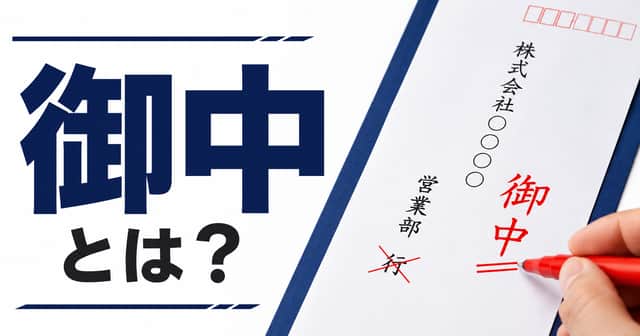
Use 御中(おんちゅう, onchu)when addressing mail to an organization or department without naming an individual. Use 様(さま, sama)when addressing a named person or a person identified by a role, such as 採用ご担当者様.
On a Japanese reply envelope printed with 行 or 宛 after the return recipient, cross out that suffix and replace it with 御中 or 様 as appropriate. The deciding factor is who receives the letter, not simply whether the address belongs to a company.
Read the final part of the recipient line. A company or department alone takes 御中. A named individual takes 様. Do not add both.
Draw two neat lines through 行 or 宛 so the organization or person's name remains readable. Avoid covering the name with a large scribble. For vertical writing, diagonal or horizontal correction lines are commonly used; for horizontal writing, horizontal lines are a straightforward choice. The important point is a clear, legible correction.
For a vertically written address, place the replacement beside or below the corrected suffix where it reads clearly. For a horizontally written address, use the available space beside it. Follow any special return instructions supplied with the envelope.
If 御中 is already printed and the recipient is still the organization, you do not need to cross it out and rewrite the same word.
Recipient | Appropriate form | Avoid |
|---|---|---|
A company as a whole | 株式会社〇〇 御中 | 株式会社〇〇 様 when the intended addressee is the organization |
A department | 株式会社〇〇 人事部 御中 | 人事部 御中 様 |
A named employee | 株式会社〇〇 人事部 山田太郎様 | 株式会社〇〇 御中 山田太郎様 |
An unnamed recruitment contact | 株式会社〇〇 採用ご担当者様 | 採用ご担当者御中 |
A return envelope addressed to a department with 行 | Cross out 行 and add 御中 | Leaving the self-addressed suffix unchanged |
A return envelope addressed to a named person with 宛 | Cross out 宛 and add 様 | Replacing it with 御中 simply because it is a business address |
These are writing examples with placeholder names. Check the actual recipient and official company name before addressing your own envelope.
御中 is an honorific used when directing correspondence to the people within an organization rather than a particular individual. It is commonly used on envelopes to companies, schools, government offices and departments.
It is not an English job title, and it does not translate neatly as “Mr.” or “Ms.” In an English-language address, use the recipient format appropriate to that language instead of automatically inserting the Japanese suffix.
For general Japanese envelope layout and honorific conventions, see Japan Post's envelope guidance.
The sender may prepare an envelope addressed back to themselves or their organization using a modest address suffix. The person returning it then changes that suffix to an honorific appropriate for the recipient.
This concerns the recipient line, not every occurrence of the characters 行 or 宛 in the document. Do not cross out a character that is part of a person's name, an address or an instruction.
Choose the suffix for the final intended recipient. A company line followed by a person's name normally ends with that person's 様; adding 御中 to the company as well is unnecessary.
ご担当者 refers to the person responsible. 採用ご担当者様 is therefore a person-directed salutation even when you do not know their name.
If the envelope already says 人事部御中 and you are returning it to that department, leave it as it is. Change it only when the intended recipient or existing suffix makes a correction necessary.
Honorifics are only one part of the envelope. Also check the postcode, address, company and department, sender information, contents and required postage or return method.
When writing to a specific person, use their name followed by 様. When contacting an unknown person responsible for hiring, 採用ご担当者様 is often clearer than addressing the organization in general. Match the salutation to the intended recipient and the context of the exchange.
Use it if the address ends with a company or department alone. If a recruiter is named, use 様 for that person. Follow the employer's provided destination details.
A neat correction matters, but choosing the appropriate honorific and keeping the address legible are the central points. Do not obscure the recipient while trying to perfect the line direction.
The honorific correction concerns the return recipient. Do not add an honorific to your own sender name.
A certificate of resignation in Japan must be issued by your employer on request, and is distinct from the separation no...
Under Japanese civil law, employment with no fixed term ends two weeks after you give notice, regardless of whether you ...
Japanese resident tax is charged on the previous year's income and deducted from June to May. Leaving between January an...


