Do You Need a Tax Return for Spot Work? Explained by Case
Published:
Last Updated:
Category: Side Jobs
Published:
Last Updated:
Category: Side Jobs
Authors: Shusaku Yosa
Are you wondering, "Do I need to file a tax return for the money I earned from spot work (sukima baito)?" Spot work apps such as Timee and Sharefull are easy to start, but the handling of taxes can be hard to understand. Whether you need to file depends on your situation, such as whether you have a main job and your annual income. This article organizes and clearly explains the cases where a tax return is needed and the cases where it isn't for spot work.
The first thing to keep in mind is that most spot work is "employment income" based on an employment contract. Even through an app, you form an employment relationship with the place you work, so each workplace pays you as wages and issues a withholding slip (gensen choshu hyo).
This differs from the "miscellaneous income or business income" of freelancers and contract work. A feature of employment income is that, in principle, you don't deduct expenses; instead, you judge by the amount of the wage income itself. Whether you need to file is also considered based on this "amount of wage income."
Whether you need to file changes depending on your position. Let's look at the representative cases.
If you are a company employee whose main workplace does your year-end adjustment, you need to file a tax return when your annual wage income from a side job such as spot work exceeds 200,000 yen. If it is 200,000 yen or less, an income tax return is in principle not required (but note the residential tax described later).
If your main job has done your year-end adjustment and your side-job spot work income is 200,000 yen or less, an income tax return is in principle not required. However, this is an income tax rule, and there is no such exception for residential tax. Note that even at 200,000 yen or less, a separate residential tax declaration is required.
If you are a student or work within a dependent's range, no income tax applies and a return is in principle not required if your total annual wage income is 1,030,000 yen or less. However, if you juggle multiple apps, you may exceed 1,030,000 yen and fall out of dependent status without realizing it. Manage your income frequently.
If spot work is your main income and you receive no year-end adjustment at any workplace, you often need to settle one year's income tax through a tax return. If the tax withheld at source has been overpaid, it may be refunded through filing.
If you worked at multiple workplaces or apps, only one company can do the year-end adjustment. Since the wages from the other workplaces fall outside the year-end adjustment, you need to combine all the withholding slips, file a return, and calculate the correct tax amount.
Even when filing isn't an obligation, filing can sometimes get tax back. Those who fit the following should consider it.
The specific procedure for a tax return and the difference between blue and white returns are explained in detail, with diagrams, in our article on side-job tax returns. Please use it as a reference as well.
If you file, prepare the following documents. Since expenses are basically not deducted from employment income, what you need is simple.
You can complete the preparation and submission of the return from home using the National Tax Agency's "Tax Return Preparation Corner" or e-Tax. For the detailed procedure, see our side-job tax return guide article.
The workplace has an obligation to issue the withholding slip. It can sometimes be checked within the app, so first check the app's help or the workplace. If you really can't obtain it, consulting your nearest tax office is the surest way.
An income tax return is in principle not required, but a residential tax declaration is separately required. Don't forget the residential tax declaration to your municipality. If you're unsure, filing a tax return takes care of the residential tax declaration at the same time, so it's reassuring.
If you have both employment income (spot work) and miscellaneous or business income (contract work), you combine them and file a tax return. Since the judgment and the way of thinking about expenses change, note that the contract work portion is calculated as income (revenue minus expenses). For details, please refer to our side-job tax return guide.
Spot work income counts as employment income, and whether you need a tax return changes depending on your position. It can be organized as: company employees with a main job need it when side income exceeds 200,000 yen a year; students and those within a dependent's range don't need it if 1,030,000 yen or less a year; and those juggling apps or working full-time often need to settle through a return. While noting that a residential tax declaration is required even at 200,000 yen or less, if tax was withheld at source there is also a chance of a refund. Check your own case and prepare early as needed.
* The tax amount and whether you need to file vary by individual circumstances. If you are unsure about the judgment, we recommend consulting your local tax office or a tax accountant.
Find more of our articles on Google

Returning to work after a leave of absence in Japan is not settled by your treating physician's certificate alone: the t...

A leave of absence request in Japan has no statutory format and works with four items: start date and expected duration,...
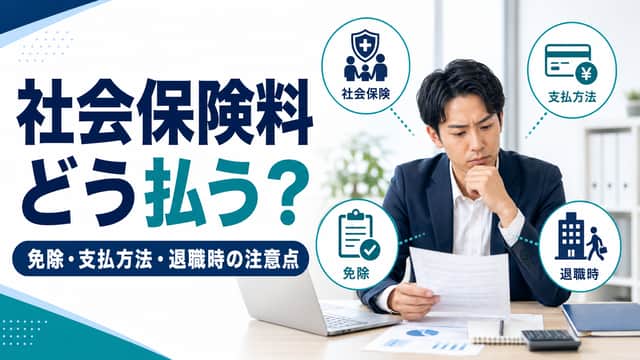
Social insurance contributions in Japan keep accruing during a leave of absence even when your pay is zero, and unlike m...


