5 Common Traits of Failed Career Changers | Concrete Strategies to Prevent Post-Hire Regret
Published:
Last Updated:
Category: Overcoming Job-Change Anxiety
Published:
Last Updated:
Category: Overcoming Job-Change Anxiety
Authors: Shusaku Yosa
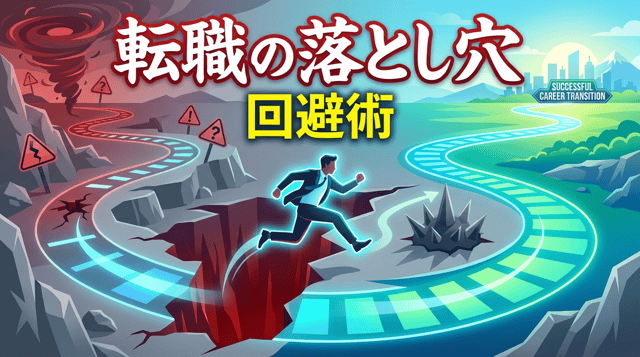
"I regret changing jobs." "I should have stayed at my previous company." — According to a survey by Shikigaku, approximately 60% of job changers reported feeling regret or that they had failed. MHLW data shows 11.4% are dissatisfied with their new job, and about 21% wish they could change jobs again if the opportunity arose. Career change failures are far more common than most people realize.
However, there are clear patterns behind these failures. This article identifies the five most common traits of people who fail at career changes and provides concrete prevention strategies for each. We also explain how experiencing a workplace before joining can dramatically reduce your risk of post-hire regret.
The fundamental reason career changes fail is the structural information gap between what you know before joining and the reality after. Job listings, interviews, and company websites only show a polished surface. The actual work content, team dynamics, management style, and company culture are nearly impossible to fully grasp before your first day. This information asymmetry is the root cause of most career change failures.
Without clearly defining what you want from your next role — your non-negotiables, priorities, and deal-breakers — you're likely to make a decision you'll regret. Prevention: Conduct thorough self-analysis to define your "career change axis" before beginning your search. Write down what you absolutely need, what would be nice to have, and what you can compromise on.
Relying solely on job postings and interviews gives you an incomplete picture. Prevention: Use company review sites, speak with current/former employees, attend information sessions, and — ideally — experience the actual workplace through services like Otameshi Tenshoku before making your decision.
When your primary motivation is fleeing from a bad situation rather than pursuing a clear goal, you're at high risk of repeating the same problems at a new company. Prevention: Separate your reasons for leaving from your reasons for choosing the next company. Even if you're leaving a difficult situation, ensure your next move is driven by what you want to achieve, not just what you want to escape.
Salary and benefits are important, but they shouldn't be your only criteria. Prevention: Evaluate the total package including work content, growth opportunities, company culture, work-life balance, and commute. A higher salary means little if the work makes you miserable.
Committing to a new company based solely on documents and interviews is inherently risky. Prevention: Use trial-based career transition services to experience the actual workplace before signing on. Otameshi Tenshoku lets you work at a company as a side job while keeping your current position, giving you firsthand insight into culture, work style, and team dynamics.
Before making your final decision, verify these seven items: your career change criteria are clear; you've gathered information beyond the job posting; your motivation is forward-looking, not escape-driven; you've evaluated factors beyond compensation; you've confirmed the actual work content; you've assessed the company culture and team dynamics; and — if possible — you've experienced the workplace firsthand.
If you're already regretting your career change, don't panic. First, allow three months for adaptation — initial discomfort is normal. Classify your dissatisfaction into things you can change through your own effort and things that are beyond your control. If the issues are structural and unchangeable, a second career change may be the right move — but only after thoroughly analyzing what went wrong the first time.
The most effective approach combines thorough self-analysis, comprehensive information gathering, and ideally, real workplace experience before joining. Otameshi Tenshoku allows you to try working at a company without quitting your current job, dramatically reducing the risk of post-hire mismatch.
Career change failures follow predictable patterns: unclear criteria, insufficient research, escape-driven decisions, compensation-only thinking, and lack of real workplace experience. By recognizing these patterns and taking preventive action — especially by experiencing your potential workplace before committing — you can dramatically increase your chances of a successful, regret-free career transition.
Find more of our articles on Google

What psychological safety means at work, signs of a low-safety environment, ways to improve it, and points for deciding ...

How many days before must you apply for paid leave in Japan? This article explains law vs. work rules, same-day requests...
Is a medical certificate required to return to work in Japan? This article explains what to ask your doctor to write, ty...