Mandatory Retirement and Unemployment Benefits in Japan: Ages 60 and 65, Job Seeking and Rest

Published:
Last Updated:
Category: Overcoming Job-Change Anxiety
Authors: Shusaku Yosa
Leaving a job at the employer's retirement age can qualify you for unemployment benefits if you meet the insurance and other conditions and are willing and able to work while seeking employment. Benefits are not automatic on retirement and are not simply paid while you choose to stop working for a while.
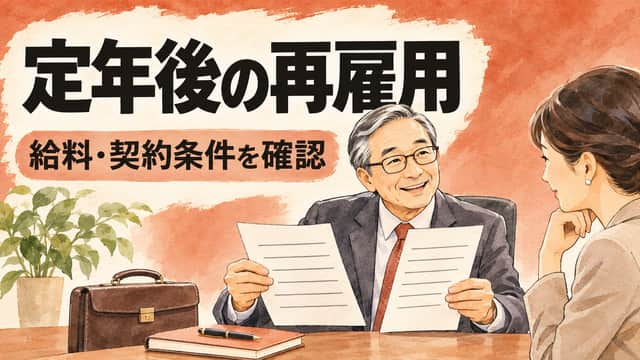
Before retirement, consider whether you will look for another job immediately, continue through reemployment or take a break. This guide focuses on how those choices affect the benefit and timing of procedures. Use our general unemployment benefit guide for detailed daily rate calculations and the older jobseeker benefit guide for the full rules for people leaving at 65 or above.
Check age at separation and your job seeking plans first
Status at separation | Main benefit to check | Decision before leaving |
|---|---|---|
Age 60 to under 65 | Basic allowance for ordinary insured workers | Seek work immediately or ask about an extension for a retirement break |
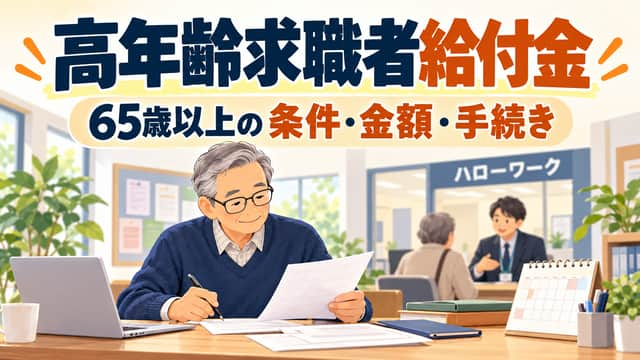
High age insured worker aged 65 or above | Older jobseeker benefit | Check lump sum conditions and the deadline |
Moving directly into the next employment | Whether you are unemployed for benefit purposes | Do not assume a formal retirement alone creates entitlement |
The relevant classification uses age at separation, not age when applying. Employment insurance treats a person as reaching an age on the day before the birthday. For a 65th birthday on May 10, the age attainment date is May 9. If considering separation near that boundary, show Hello Work the proposed retirement or contract end date before deciding.
Ages 60 to 64: check insurance periods and the reason for leaving
The ordinary qualifying requirement is at least 12 insured months within the two years before separation. Certain specially qualified recipients or recipients leaving for specified reasons may qualify with six months within the preceding year. These are not simply years on the payroll. Tell the office about part time periods, absences and previous benefit claims.
For ordinary retirement where the separate tables for specially qualified recipients and similar categories or people with employment difficulties do not apply, scheduled benefit days are 90 for an insured period under 10 years, 120 for 10 to under 20 years, and 150 for 20 years or more. Retirement alone does not place someone in the more generous dismissal related table.
The daily amount depends on relevant wages and age, with upper and lower limits. For example, if the daily amount is determined as ¥5,000 and scheduled entitlement is 150 days, receiving all eligible days within the deadline without a rate revision would total ¥750,000. A certification covering 28 days would be ¥140,000. This is not a fixed monthly salary payment.
Seeking work immediately: waiting days are not the first payment date
After submitting separation documents and completing job seeking and benefit procedures, there is a waiting period totaling seven days of unemployment. Ordinary retirement at the employer's retirement age is generally not subject to the benefit restriction for voluntary resignation without a justifiable reason. Leaving voluntarily before that age or ending a later reemployment contract can involve different circumstances, so confirm the actual classification.
Payment does not necessarily arrive the day after the waiting period ends. It follows unemployment certification. Before leaving, note:
- When the employer expects to issue separation documents and whom to contact if they do not arrive.
- Your office visit, required documents, orientation and certification schedule.
- The payment dates for final salary and any retirement allowance, and your immediate living costs.
- Resident tax, health insurance, pension and other payments after retirement.
If the stated reason for leaving is inaccurate, bring contracts and correspondence explaining what happened. See our separation document guide.
Taking a break: ask about an extension early
People aged 60 to under 65 leaving because of retirement or a qualifying equivalent reason who do not wish to seek work immediately may be able to extend the basic allowance receiving period. Apply within two months from the day after separation. Check the documents and method before retirement rather than waiting until the break is over.
The ordinary receiving period is one year from the day after separation. The extension for this retirement break can add up to one year. It does not increase scheduled benefit days or provide payments during the break. Complete job seeking and benefit procedures once you are ready to seek work.
Extensions because illness, injury, caregiving or another circumstance prevents work have different reasons, application timing and maximum periods. Explain whether you are choosing a retirement break or are unable to work because of a specific circumstance.
Age 65 and above: do not apply the basic allowance extension rules
The older jobseeker benefit generally requires at least six insured months within the year before separation, unemployment and other conditions. The lump sum equals 30 daily benefit amounts if the insured period used for the amount is under one year, or 50 if it is at least one year.
Its deadline is one year from the day after separation, and it has no equivalent extension of the receiving period. A late certification may leave insufficient days for the full amount, so consult early even if you plan a break. Do not choose a separation date solely by comparing headline benefit totals: consider future work, wages, pensions and insurance costs together.
For people receiving certain old age pensions before 65, including the specially provided old age employees' pension, applying to seek work for basic allowance can affect pension payments. The adjustment is not necessarily limited to days on which benefits are actually paid. Check with both Hello Work and the pension office.
Take five facts to your consultation
- Date of birth, proposed separation date and the employer's stated reason.
- Any reemployment offer and whether the next job is already arranged.
- Whether you will seek work immediately, rest or undergo treatment.
- Insurance history, previous claims and wages before separation.
- Pension receipt and the dates needed for procedures.
Short part time work and trial work while receiving benefits must also be reported, including days, hours and income. Plan job seeking and benefit procedures together and explain any proposed work to the office before starting.
Sources: Hello Work: basic allowance / Hello Work: scheduled benefit days / MHLW: information for people leaving employment / Osaka Labour Bureau: receiving period extensions / Tokyo Hello Work: age calculation / Japan Pension Service: pension and unemployment benefit adjustments