The Complete Guide to Social Media Analytics | How to Centralize Multi-Platform Data and Maximize Results
Published:
Last Updated:
Published:
Last Updated:

Category: Social Media Analytics
Authors: Shusaku Yosa
Social media has become an indispensable marketing channel, but simply posting content and casually checking like counts won’t drive real results. This article provides a comprehensive guide—from the fundamental question of why social media analytics is necessary, to platform-specific KPI design, analytics tool comparisons, and the benefits and practical methods of centralizing data across multiple social platforms.
In social media operations, it’s common to see teams vaguely copying viral posts or focusing solely on follower counts. However, this approach lacks reproducibility and makes it impossible to identify success factors, hindering long-term performance improvement. By implementing social media analytics, you can objectively understand which content moved which metrics, enabling a data-backed improvement cycle.
When investing budget in social media marketing, accountability to management for return on investment is essential. By quantitatively demonstrating trends in engagement rates and reach, and visualizing contributions to website traffic and conversions, you can prove the value of social media initiatives internally. This directly impacts securing next year’s budget and strengthening team resources.
Social media analytics is valuable not just for your own accounts but also as a means of tracking competitor activity. Analyzing competitors’ follower growth rates, posting frequency, and high-engagement content trends provides actionable insights for your own strategy. Social listening also enables you to pick up on industry-wide trends and user sentiment early.
Social media metrics can be organized into four categories. Reach metrics include impressions (total times a post was displayed) and reach (unique users who saw the post). Engagement metrics include likes, comments, shares, saves, and the engagement rate calculated by dividing these by reach or followers.
Follower metrics include follower count trends and growth rate, along with follower demographics (age, gender, location, active hours). Conversion metrics include link clicks, profile visits, website referral traffic, and SNS-attributed conversions and revenue measured via UTM parameters. Combining these metrics according to your objectives and monitoring them regularly forms the foundation of social media analytics.
Instagram excels in visual appeal and is strong for branding and e-commerce integration. Key KPIs to prioritize are save rate and Reels completion rate. Saves boost algorithmic ranking and expand post visibility. Reels offer significant exposure on the Explore tab, making them a primary tool for new audience acquisition. Also track Stories sticker tap rates, link click-through rates, and feed post profile access rates.
X is characterized by real-time relevance and virality, making it ideal for awareness building and customer communication. Key KPIs are repost count and engagement rate per impression. Reposts are the primary driver of organic reach expansion, and analytics should identify content formats most likely to be reposted. Qualitative analysis of quote reposts and replies also reveals brand sentiment (positive, negative, or neutral).
Facebook remains effective for reaching business professionals aged 30–50 and is widely used by B2B companies and local businesses. Key KPIs are reach rate (post reach relative to followers) and link click-through rate. Since organic reach on Facebook has been declining algorithmically, continuously monitoring per-post reach rates and identifying effective content types through analysis is essential. When running Facebook Ads in parallel, integrating ad manager data with organic metrics is ideal.
TikTok’s algorithm-driven recommendations allow significant reach regardless of follower count. Key KPIs are video completion rate and average watch time. Since TikTok’s algorithm treats completion rate as a critical signal, analyzing hook strength at the start and optimal video length is essential. Share and comment counts should also be monitored as they influence placement probability on the For You feed.
LINE Official Accounts offer outstanding domestic reach in Japan with CRM-like capabilities. Key KPIs are message open rate, link click-through rate, and block rate. While message delivery guarantees reach, excessive messaging leads to blocks, so optimizing delivery frequency and content based on analytics data is crucial. Rich menu tap rates and segment-specific delivery response differences are also LINE-specific analysis points.
Instagram Insights, X Analytics, Meta Business Suite, TikTok Analytics, and LINE Official Account Manager are free native analytics features that should be your first tools. They offer sufficient functionality for reviewing basic account metrics at zero cost. However, since each tool is confined to its own platform’s data, cross-platform comparative analysis has limitations.
Third-party tools like Hootsuite, Sprout Social, Buffer, and Social Insight offer the key advantage of viewing multiple platform data in a single dashboard. Many also provide post scheduling, competitive analysis, and automated report generation, contributing to operational efficiency. However, monthly costs apply, so selecting a tool that matches your operational scale and team structure is important.
Platforms that integrate not only social media data but also web advertising and analytics data have emerged. These tools enable cross-comparison of organic post performance with ad campaign results, and provide a single-screen view of the entire funnel from social referral traffic to conversions. They are particularly effective when you want to evaluate your overall marketing efforts holistically.
When choosing an analytics tool, check platform coverage, data granularity (post-level vs. account-level), report customizability, team sharing features, and API integration availability. In the Japanese market, LINE Official Account data support is a particularly important selection criterion. We recommend using free trial periods to test whether a tool fits your workflow before committing.
The greatest benefit of centralized management is the ability to easily compare performance across different platforms. For instance, when running the same campaign on Instagram and X, you can compare reach, engagement rates, and conversion contributions side by side to accurately evaluate cost-effectiveness by channel. This enables informed decisions about concentrating limited resources on the most effective platforms.
Exporting data from each platform’s dashboard and consolidating it into spreadsheets places a heavy burden on social media managers. Centralized tools generate unified reports from a single dashboard, dramatically cutting reporting hours. Redirecting freed-up time to high-value tasks like content planning and creative production is a significant advantage.
Analyzing each platform individually tends to limit optimization to within each silo. Centralized management provides a bird’s-eye view of all marketing activities, enabling holistic decisions about overall social media budget allocation, content strategy, and integration with other channels like web advertising and SEO. Unifying siloed data drives organization-wide marketing performance improvement.
A centralized dashboard is valuable not just for the marketing team but also for sharing information with sales and executive leadership. Discussing strategy around a shared data source prevents misalignment and enables rapid cross-team consensus on direction. This is especially powerful when social operations are distributed across multiple team members or partner agencies.
Before starting analytics, clarify the purpose of your social media operations. The KPIs you track will differ depending on whether your goal is brand awareness, e-commerce revenue, or customer support efficiency. Once objectives and KPIs are set, establish numeric targets and monitoring frequency. Separating weekly operational metrics from monthly strategic metrics ensures appropriate analysis granularity.
Set up API access for each platform and complete analytics tool integrations. Standardize UTM parameter naming conventions across your team and ensure social-referred website traffic is accurately tracked in tools like GA4. Insufficient data collection design at this stage leads to discovering critical data gaps later, so invest adequate time in initial setup.
Once data accumulates, establish regular analysis routines. Analyze post-level performance comparisons, engagement patterns by time of day and day of week, and response differences by content category to identify success patterns and improvement points. Combining quantitative data with qualitative observations (comment content, quality of user responses) is the key to high-quality analysis.
Based on insights from analysis, plan and execute specific improvements. Limit changes to 1–2 variables at a time—such as posting time, hashtag strategy, or content format—to enable accurate effect measurement. An A/B testing approach with repeated hypothesis verification improves PDCA cycle precision.
Understanding common failure patterns is important. First, there is the over-focus on vanity metrics like follower count. If follower growth doesn’t translate to engagement or conversions, its business value is limited. Set metrics aligned with your objectives and don’t be misled by vanity numbers.
Second, making naive cross-platform comparisons. Instagram likes and X reposts differ fundamentally, so judging superiority by numbers alone can lead to wrong conclusions. Understanding each platform’s characteristics and correctly interpreting metrics is essential.
Third, falling into “analysis for analysis’s sake”—analyzing without reflecting findings in strategy. Don’t stop at creating reports; build a system that ties analysis results to next actions. Set a rule that analytics meetings end with both “what we learned” and “what we’ll do next.”
Social media analytics is the foundation for moving beyond gut-feel operations and delivering reproducible results. Start by designing platform-appropriate KPIs and leveraging native insights. As operations scale, adopting a centralized multi-platform management tool unlocks major benefits like cross-platform comparison and reporting efficiency.
The key is to avoid making analysis an end in itself. Reflecting insights into content strategy and budget allocation decisions, and continuously cycling through improvement and verification, is the only path to maximizing social media marketing results. Start by auditing your current social media operations and building an analytics framework.
Find more of our articles on Google

A beginner's guide to creating a Facebook business account (business portfolio). From the difference with a Facebook Pag...

A thorough beginner’s guide to using a Facebook Page. From the basics—how it differs from a personal account and the ste...
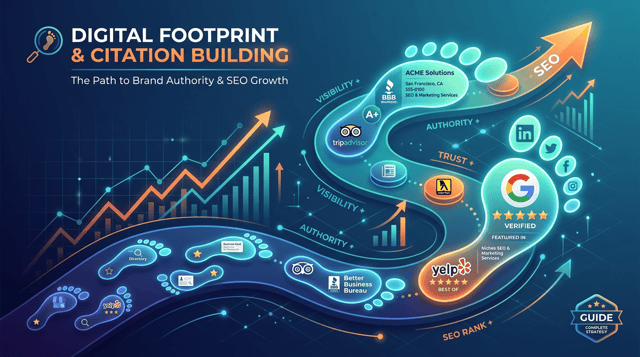
Learn what a citation is, how it affects SEO and MEO, and how to leverage it. Covers NAP consistency, Google Business Pr...


