
Published:
Last Updated:
Category: Social Media Analytics
Authors: Shusaku Yosa
As social media becomes an increasingly vital component of corporate marketing strategy, the role of the "social media marketer" is attracting rapid attention. Job postings related to social media marketing have reached approximately 40,000, with nearly 5,000 new listings appearing daily (as of 2025).
This article provides a comprehensive overview of the social media marketer role from a practitioner’s perspective—focusing on the data analysis skills and tool utilization methods essential for SNS operations, along with job responsibilities, required skills, salary benchmarks, and career paths. Whether you’re aspiring to become a social media marketer or looking to upskill in your current SNS role, this guide has you covered.
What You’ll Learn
Definition and role of a social media marketer / 5 core job responsibilities in detail / 6 essential skills demanded in the field / Key data analysis tools and practical usage methods / Salary benchmarks and concrete career advancement steps / A roadmap for transitioning from a non-marketing background
A social media marketer is a specialist who strategically leverages platforms such as Instagram, X (formerly Twitter), TikTok, Facebook, YouTube, and LINE to increase brand awareness, boost user engagement, drive traffic, and contribute to revenue growth.
Unlike traditional one-way communication channels such as TV commercials or corporate websites, social media marketing is defined by two-way interaction with users. The role requires continuous, high-speed PDCA cycles driven by real-time analysis of reactions—likes, comments, shares, and more.
Research data shows that 72% of internet users research brands on social media before making a purchase decision, making the social media marketer a revenue-critical position for businesses.
The scope of a social media marketer’s work is broad, built around five key pillars.
As the “voice” behind a company’s official accounts, you plan, create, and schedule content. This involves optimizing posts for each platform’s unique characteristics while maintaining a consistent brand tone and manner. Responding to follower comments and DMs is equally important—building trust through genuine user engagement.
You design and manage paid campaigns across Meta Ads (Instagram/Facebook), X Ads, TikTok Ads, and LINE Ads to precisely reach target audiences. This requires end-to-end management of budget allocation, bid strategy adjustments, creative A/B testing, and performance evaluation using metrics such as CPA and ROAS.
Data analysis is one of the most critical skills in social media marketing. You regularly monitor metrics such as impressions, engagement rate, follower growth, and reach to design subsequent strategies based on quantitative data. Leveraging tools like Google Analytics and Meta Business Suite to move beyond intuition-based operations and deliver reproducible results is a non-negotiable requirement for professionals.
You select influencers who align with the brand image, negotiate compensation terms, and direct content creation. Rather than simply choosing individuals with large followings, this requires analytical skills to evaluate target-audience fit, engagement rates, and past controversy risks from multiple angles. Post-campaign, you verify ROI by measuring reach and conversion contributions through data.
Social listening involves collecting and analyzing user-generated posts and reviews on social media to uncover consumer insights and trends. The top objective for Japanese companies engaging in social listening is gathering and analyzing consumer insights—leveraging the candid voices that only the anonymity of social media can provide to inform product development and service improvements. Planning and executing buzz-worthy campaigns to generate UGC (user-generated content) and drive viral sharing is another area where social media marketers showcase their expertise.
To deliver results in the field, social media marketers need a balanced combination of these six skills.
What separates success from failure in social media operations is data-driven decision-making, not intuition. Beyond surface-level metrics like the number of likes on a post, you need the ability to read the underlying context—who engaged, when, and why. Running a continuous, data-driven PDCA cycle from KPI setting through to performance review and strategy refinement is the foundational skill of a social media marketer.
This is the ability to produce compelling content that captures target audiences. It encompasses catchy copywriting, eye-catching visual production (images and video), and narrative-driven post design. In recent years, Instagram Reels and TikTok short-form videos have commanded growing attention, making basic video editing skills increasingly important.
Social media is just one marketing channel. Understanding foundational marketing frameworks—persona design, customer journey mapping, funnel architecture, competitive analysis—allows you to position social media initiatives appropriately within a broader business strategy.
Social media marketers collaborate with a wide range of stakeholders. From internal designers and sales teams to external ad agencies and influencers—and even direct dialogue with followers—smooth, multifaceted communication is indispensable. Influencer collaborations in particular involve detailed coordination around contract negotiation, shoot direction, and scheduling.
The social media landscape evolves at breakneck speed, with new features and algorithm changes emerging daily. Being able to catch trends early and incorporate them into your strategy is a key competitive differentiator. Staying attuned to emerging platforms like Threads and Bluesky, and continually updating your knowledge of the latest developments, is essential.
Social media operations always carry the risk of a PR crisis. To prevent brand damage from inappropriate posts or misunderstood messaging, you must build pre-publication review processes, prepare crisis-response manuals, and design appropriate response workflows for negative comments. Building systems to minimize risk is a critical responsibility of the social media marketer.
To maximize the impact of social media marketing, mastering the right analytics tools is essential. Here we explain the major tool categories used in practice, along with actionable usage methods.
Start with the free native tools each platform provides. X Analytics lets you check impressions and engagement rates at the tweet level; Instagram Insights enables audience-attribute analysis of users you’ve reached. Facebook Page Insights and Meta Business Suite allow centralized management across multiple Meta platforms. Mastering these free tools is the first step toward building your data analysis skills.
When native tools fall short, consider dedicated paid analytics platforms. For instance, SINIS—an Instagram-focused tool adopted by over 50,000 accounts—enables competitor benchmarking and detailed hashtag effectiveness analysis. SocialDog, specializing in X, consolidates post scheduling, follower analysis, and competitor comparison in one place. Cross-platform management tools like Comnico Marketing Suite significantly improve team operational efficiency.
Social listening tools are used for sentiment analysis and trend monitoring. Meltwater, deployed by over 34,000 companies worldwide, enables comprehensive monitoring spanning not just social media but also news and blogs, and supports consumer insight discovery and influencer campaign ROI measurement. In Japan, Buzz Finder monitors the full volume of X data 24/7 with features specialized for early crisis detection. Mieruka Engine uses text mining technology to analyze not only social media but also survey and voice data in an integrated manner.
GA4 (Google Analytics 4) is essential for measuring traffic and conversions from social media to your website. By using UTM parameters to accurately track social-media-driven visits, you can visualize which platforms and which posts contribute to final outcomes (purchases, inquiry submissions, membership sign-ups, etc.). Crossing social post analytics with web analytics enables data-driven decision-making with a full-funnel perspective.
Social media marketers must understand the distinct user demographics and algorithm characteristics of each platform and tailor their approach accordingly.
X (formerly Twitter) excels in real-time reach and virality, requiring speed in responding to news and trends. Instagram centers on visual appeal, where short-video strategies using Reels and Stories are key to boosting engagement. TikTok’s algorithm-driven “discovery” feature means high-quality content can go viral regardless of follower count.
Facebook has strong affinity with community management and B2B marketing. YouTube is well-suited for long-form educational content and brand storytelling. LINE commands an overwhelmingly large user base in Japan and excels at 1-to-1 communication through CRM integration.
Salaries for social media marketers vary by experience and employer, but general benchmarks in the Japanese market are as follows.
Entry-level and junior positions typically start at ¥3–4 million per year. Mid-level professionals with 2–3 years of experience generally earn ¥4–5 million, with those possessing strong data analysis and ad operations skills commanding even higher compensation. Senior positions at large companies can exceed ¥5 million, while manager and specialist roles reach the ¥6–8 million range.
Working styles broadly fall into three categories. In-house social media roles at operating companies offer the appeal of deep brand commitment and long-term growth strategy. Agency or consulting firm positions expose you to diverse industries—cosmetics, food, IT, real estate—simultaneously, enabling rapid skill accumulation. Freelancing is also an option, offering high flexibility in exchange for the need to manage client acquisition and self-discipline.
Several advanced career paths open up as you build experience as a social media marketer. First, you can deepen your social media specialization to lead a team as an SNS marketing manager or director. Alternatively, you can leverage the data analysis and marketing expertise gained through social media to step up into a CMO (Chief Marketing Officer) or marketing manager role overseeing the entire digital marketing function.
As AI, AR, and other technologies increasingly converge with social media, expanding into data science or MarTech (marketing technology) is another career trajectory gaining momentum. With the frontier of social media marketing evolving rapidly—from metaverse ventures to AI-generated content—demand for tech-savvy marketers is projected to grow significantly.
No specific certification is required to become a social media marketer. By following the right steps, you can build a career path even without prior marketing experience.
Start by gaining hands-on experience with your own social media accounts. Set specific KPIs such as “grow followers by 100 in one month” or “average 10 likes on posts about a specific topic,” and intentionally test variables like posting times, content formats, and hashtags. Building the habit of recording and analyzing results with data will directly serve as proof of your practical skills.
Search for “social media marketing” on job sites to understand what skills employers are looking for. You’ll discover specific requirements like “SNS ad operations experience,” “Google Analytics proficiency,” or “creative production skills.” Use these insights to systematically fill knowledge gaps through online courses and books.
Create a portfolio showcasing your personal social media achievements. Prepare data-backed deliverables—follower growth graphs, engagement rate improvement case studies, analysis reports on viral posts—to create persuasive proof of competence even without professional experience.
Apply to social media marketing agencies or in-house SNS positions. While entry-level openings exist, demonstrating a combination of skills—such as “I also have experience with PPC advertising and SEO”—can differentiate you in the selection process. Start in an assistant role, and sharpen your skills through hands-on experience in the field.
The social media marketer is a hybrid specialist who combines data analysis prowess with creative talent. Social media user numbers continue to rise, and demand for specialized talent far outstrips supply.
The key is not simply increasing posting volume, but establishing a cycle of data-driven strategy design and performance verification. Leveraging native platform tools and dedicated analytics solutions to run PDCA cycles grounded in quantitative evidence is the foundation for consistently delivering results as a social media marketer.
With advances in AI and AR, the rise of new platforms, and the ever-changing social media landscape, the field will continue to transform. Marketers who embrace change and commit to continuous learning will be the ones who thrive long-term in this growing market.

A beginner's guide to creating a Facebook business account (business portfolio). From the difference with a Facebook Pag...

A thorough beginner’s guide to using a Facebook Page. From the basics—how it differs from a personal account and the ste...
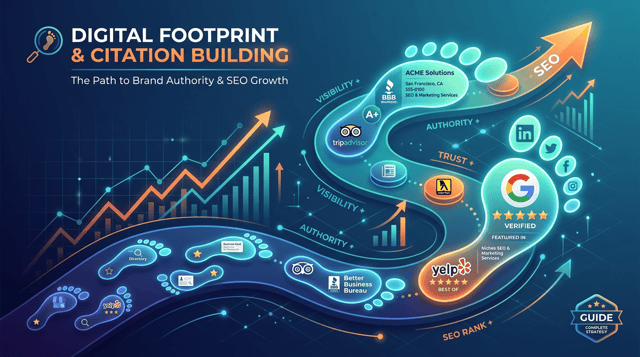
Learn what a citation is, how it affects SEO and MEO, and how to leverage it. Covers NAP consistency, Google Business Pr...


