What Is OMO Marketing? Real-World Examples in Retail and Service Industries
Published:
Last Updated:
Category: Marketing Strategy
Published:
Last Updated:
Category: Marketing Strategy
Authors: Shusaku Yosa
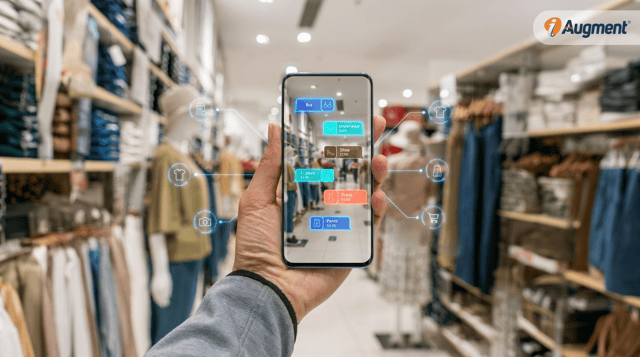
"See it in store, then buy it online" or "find it online, then try it in store and buy"—with a smartphone in hand, moving back and forth across multiple channels has become second nature for today's consumers. The way of thinking that responds to this change is OMO marketing. In this article, we organize the meaning of OMO marketing, why it is drawing attention, how it differs from the easily confused O2O and omnichannel, and concrete real-world examples in retail and service industries along with key points for adoption—all from a practical standpoint.
OMO stands for "Online Merges with Offline," a way of thinking that removes the boundary between online (EC, apps, etc.) and offline (physical stores, etc.) and fuses them to maximize the customer experience. OMO marketing refers to marketing methods based on this idea that provide a consistent purchasing experience without making customers conscious of the difference between channels.
In traditional business, online channels such as EC and offline channels such as physical stores were treated as separate, with independent measures taken for each. But now that shopping while checking reviews and stock on a smartphone has become the norm, separating the two no longer matches consumer needs. OMO is the idea of overcoming this divide and redesigning customer behavior as a single, integrated customer journey.
OMO is a concept that originally spread mainly in China and the United States. Behind it lie technological developments such as the digitization enabled by the spread of the internet, the penetration of mobile payments, advances in sensor technology, and automation through AI and robotics. These overlapped to create an environment where the same experience as offline can be had online.
In Japan, the turning point came when the COVID-19 pandemic strengthened consumers' tendency to seek contactless information gathering and purchasing, and the number of companies tackling OMO increased. As everyone carries a smartphone and the EC market keeps expanding, we have entered an era in which the question is not "online or offline" but "how to provide the optimal experience for the customer."
To understand OMO, it helps to grasp how it differs from the easily confused "O2O" and "omnichannel." All of them use online channels, but "what they put at the center" differs.
Simply put, while O2O is a "tactical method for driving traffic" and omnichannel is a "mechanism for organizing channels," OMO is a "design philosophy for customer experience that transcends channels." It becomes easier to organize if you think of OMO as a way of thinking that steps further into customer experience on top of the foundation of omnichannel.
Tackling OMO has benefits for both customers and companies.
Retail is one of the areas where OMO has advanced the furthest. Let us look at representative measures.
OMO is effective not only in product retail but also in service industries with many customer touchpoints. Let us look at examples by industry.
OMO requires large digital investment and is prone to failure if not designed carefully. Let us organize the key points for making adoption a success.
OMO marketing is a way of thinking that removes the boundary between online and offline and provides a consistent experience without making customers conscious of channels. Unlike O2O, which drives traffic from online to stores, or omnichannel, which organizes channels, its defining feature is integrating data bidirectionally with the customer experience at the center. From click & try and store pickup in retail to linking advance ordering and online reservations with the in-store experience in service industries, real-world examples are spreading regardless of industry. When adopting it, working backward from the customer experience rather than from tools, building the data foundation, and starting small across departments are the keys to success.

Twelve decisions to settle in a marketing leader's first 90 days, organised by period. Days 1–30 for understanding the c...

How to allocate a marketing budget and track it against actuals, built around a quarterly reallocation cycle. Covers spl...

What a CMO decides in the age of AI, split into decisions that can be automated and decisions that cannot. Covers the di...


